

About
Independent Living
Gallery
Contact


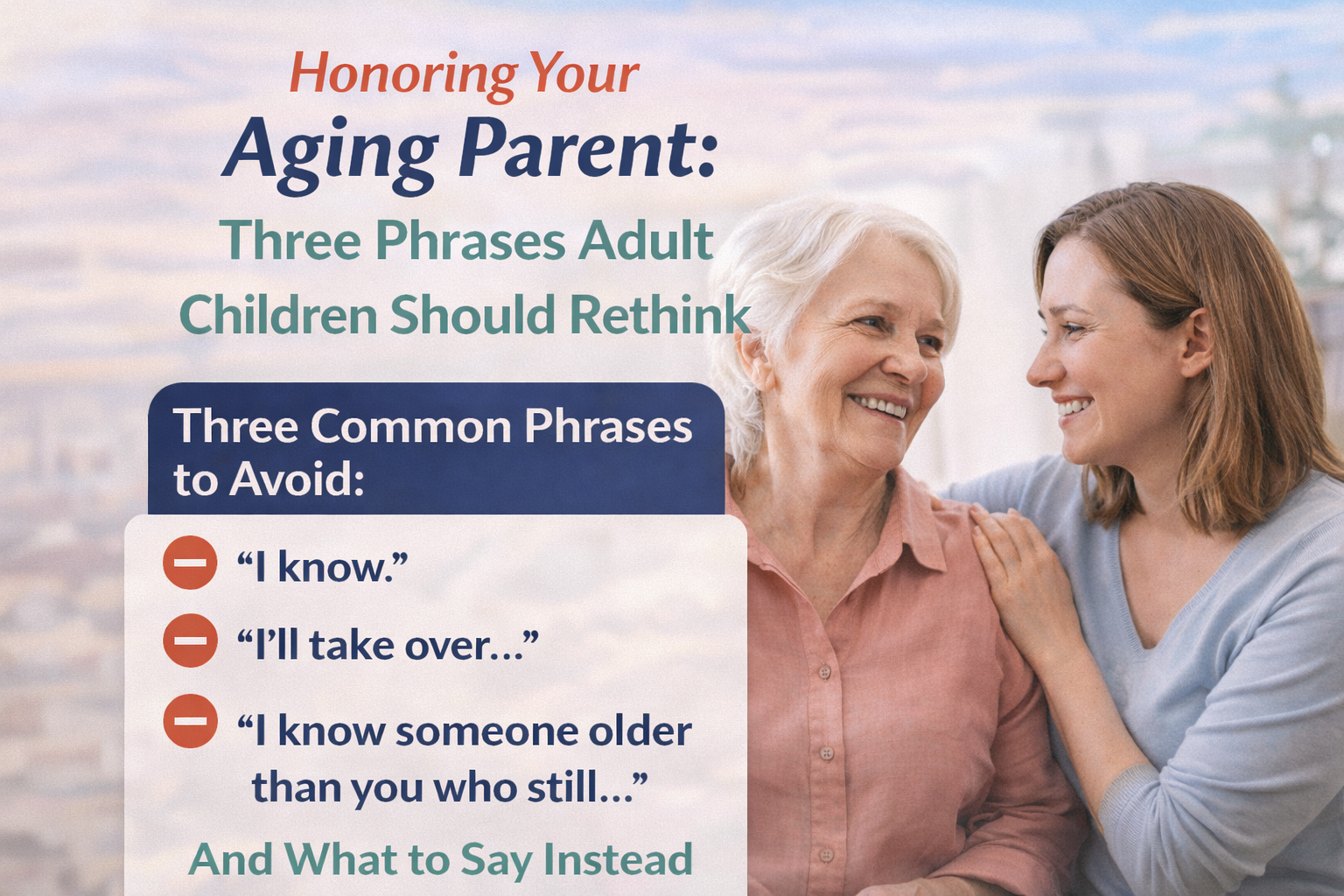
There are some life experiences you can’t fully prepare for. Walking alongside a parent as they age is one of them.
This season is unfamiliar not only for adult children, but for parents as well. Many older adults are quietly navigating new emotions—loss of independence, changes in health, shifts in identity, and often an unspoken fear about what lies ahead. That makes conversations tender territory. Even well-meaning words can unintentionally land as dismissive, controlling, or hurtful.
While this isn’t an exhaustive list, here are three common phrases adult children should reconsider—and what to say instead.
When a parent opens up about their fears, frustrations, or changes they’re experiencing, responding with “I know” can unintentionally shut the conversation down.
While meant to convey empathy, it often communicates the opposite: You’ve already been categorized. Your experience has been simplified. If your parent is sharing concerns about memory lapses, physical changes, or emotional struggles, they aren’t looking for comparisons, articles you’ve read, or relatable anecdotes. They’re sharing vulnerability.
The truth is, you can’t fully know what they’re experiencing—because you aren’t living it.
Instead, try:
These responses honor their experience without minimizing it.
When tasks like bill pay, appointments, or household responsibilities start to feel overwhelming for a parent, adult children often step in quickly—declaring, “Don’t worry, I’ll take over.”
While practical and well-intentioned, this approach can feel like a loss of autonomy rather than a gift of help. Many parents have been independent adults for decades. Having responsibilities abruptly taken away can trigger resentment, embarrassment, or quiet resistance.
This may show up as passive comments like, “I’m not the one in charge anymore,” or as parents holding tightly to remaining tasks—even hiding struggles—to preserve dignity.
Instead of taking over, aim to partner.
Try saying:
Collaboration preserves independence while still providing support.
We’ve all heard the stories—the 100-year-old marathon walker or the 95-year-old volunteer who never slows down. When a parent is struggling, it can be tempting to share these examples in hopes of motivating them.
Unfortunately, comparison rarely motivates—and often wounds.
Aging doesn’t follow a universal timeline. Genetics, health history, injuries, and life circumstances all play a role. Comparing your parent’s limitations to someone else’s abilities can leave them feeling inadequate, discouraged, or unseen.
Instead of focusing on what they can’t do anymore, focus on what they can do now.
Offer:
Progress may look different than it once did—and that’s okay.
Honoring an aging parent isn’t about having perfect words. It’s about listening more than fixing, partnering instead of taking over, and choosing empathy over comparison.
When adult children shift their language, they often open the door to deeper trust, better communication, and a stronger relationship—during a season when connection matters most.


